어떤 요인이 흡광도에 영향을 미칠 것인지?

1. 흡광도와 투과율은 무엇입니까??

absorbance

흡광도 (에이), 광학 밀도라고도합니다 (의), 요소가 흡수하는 빛의 양입니다..
빛이 물체에 닿으면, 분석물의 분자나 원자는 빛을 흡수할 수 있습니다., 일반적으로 흡수된 빛의 파장은 물체의 전자 여기와 일치하기 때문입니다..

The rest of the light is transmitted, in other words, it passes through the object, which is called transmittance (T).
The more analyte is found in the solution, the lower transmittance will be due to the more light is absorbed by it.

2. Why measure absorbance?

In biochemistry, biology or chemistry, when analyte absorbs the light at a specific wavelength, a unique relationship exists between the individual atom/molecule and its UV Vis spectrum. This relationship can be used for:

  • Qualitative analysis – determining the presence of certain substances.
    예를 들어, determining pesticide residues in food, identification of contamination such as COD in water, identification of nucleic acid such as COVID-19 testing.
  • Quantitative analysis – determining the amounts of certain substances.
    예를 들어, determining the concentration of substances in air such as PM2.5, determining the concentration of harmful substance such as mercury and asbestos in makeup, measuring calcium and protein content in dairy products.

3. How is absorbance detected?

  • Light source
    The all-important thing for light transmission or absorption measurement is the light source.
    Different light sources can be used for absorbance measurements. They differ in the spectral wavelength range, in their optical intensity and in the light stability.
  • Sample
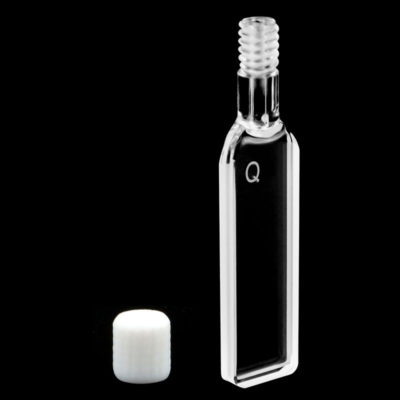
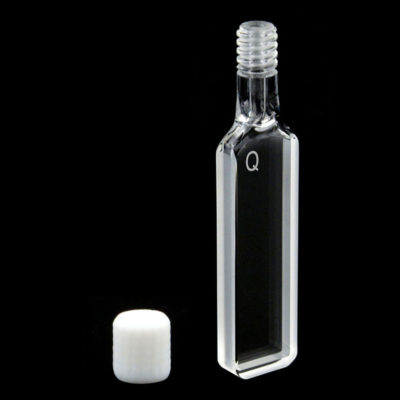
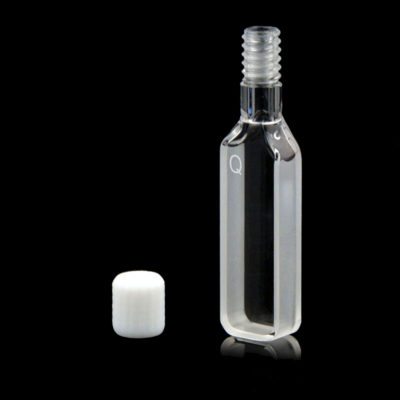
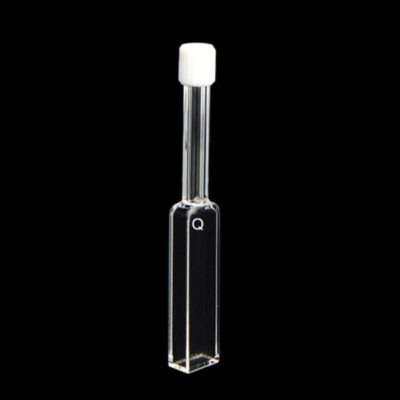
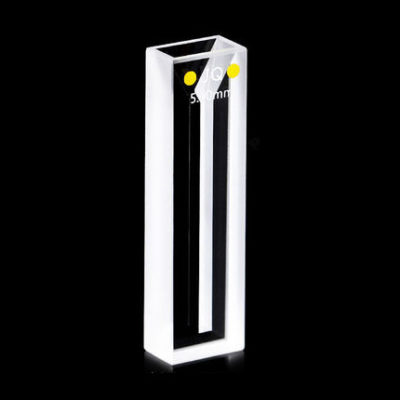
    The solution with analytes of interest in proper volume usually needs to be placed into a cuvette, in order to measure the absorbance of the interested substance.
  • Cuvette Material
    The third important thing is choosing the right cuvette material. The material of cuvette is always clear and smooth, to ensure maximum light transmission and less light scattered, on account of researcher’s interest is in the absorbance of the solution rather than the material.
  • The appropriate blank
    In order to correct undesired absorbance of absorbance measurements, such as light scattering, a blank is measured in parallel to samples. The appropriate blank includes all components except the analyte of the assay.
    Side Note: Particles in the solutions scatter the light, it will increase the measured absorbance value since they block the light path, as a result, less light reaches the detector.
  • Detector of absorbance measurements
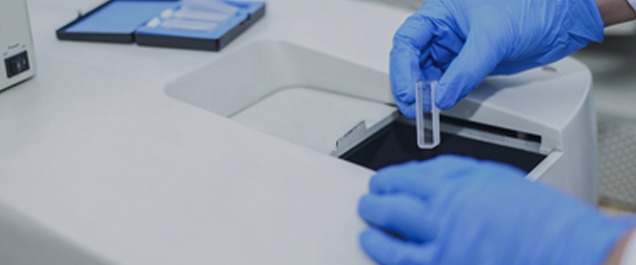
    A UV-VIS spectrophotometer is an instrument designed to measure absorbance in the UV-VIS region using the Beer-Lambert law. Measures the intensity of light passing through a sample solution in a cuvette and compares it to the intensity of the light before passing through the sample.

4.Theoretical background of absorbance measurements

  • Detection path in cuvettes
    A solution contains interested analytes with known absorbance characteristics is placed into a cuvette. Then insert the cuvette into the instrument chamber, the absorbance reader will determine the light absorbance by calculating the optical density difference before and after passing the sample.
    (Light that does not pass through the detector is either absorbed or scattered. The scattered part can be corrected by measuring appropriate blanks, and is subtracted from this value to obtain real absorbance of the interested substance.)
absorption measurement
  • Absorbance in chemistry and life sciences
    After the absorbance measurement, the result is a value given in either transmission or optical density. Whereas, quantification of a substance in solution is the goal of the measurement, then the obvious question is how to convert the known signal into the concentration value. 일반적으로, we can employ the Beer-Lambert law to get it.
  • Beer-Lambert Law
    The Beer-Lambert law is very helpful as it allows quantification of absorbing substances without the need to add any other reagents, it describes the relation of absorbance, path length and concentration of an absorbing substance:
    A=εlc
    A – absorbance
    ε – molar attenuation coefficient or absorptivity of the attenuating species – M‾¹cm‾¹
    l – optical path length – cm
    c – concentration of the attenuating species- M

It says that there is a linear relationship between the concentration, absorbance, path length and molar optical coefficient, which enables the concentration of solution to be calculated by measuring its absorbance.
For instance, in a standard cuvette the path length is 1 cm. For an absorbing substance and a specific wavelength, the extinction coefficient (ε) is a constant specific, usually the absorbance maximum of the substance, which provides information on how strongly the specific substance absorbs light at the specific wavelength.
As an example, the molar extinction coefficient for oligonucleotides is 32.4 µl*cm-1*µg-1. 그러므로, a solution of 1 µg/µl oligonucleotides with a path length of 1 cm has an absorbance of 32.4 의.

5.What will affect your absorbance measurements?

  • Does cuvette material affect absorbance?
    When measuring in the UV-range, as it is required for nucleic acids or NADH, the UV-transparent cuvette is requisite to finish the measurement. Otherwise, you will get the maximum absorbance in all samples in this absorbance measurement because the material of cuvette absorbs UV light.

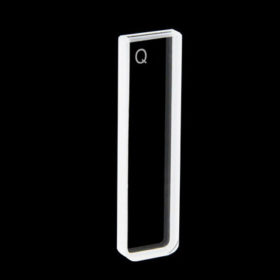
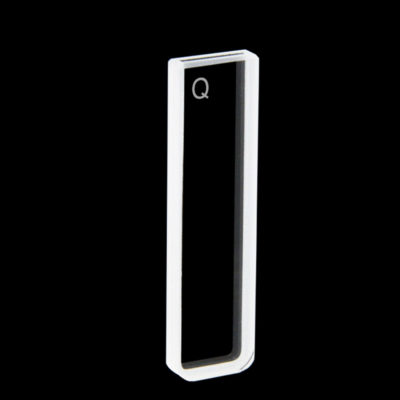
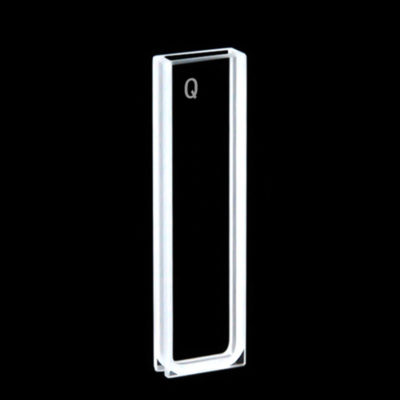
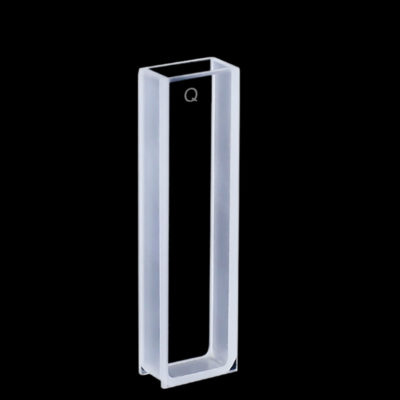
We have various cuvette material, and there are 5 common material you can choose to use, Plastic, Glass, UV Quartz (로드 -1-1), VIS Quartz (물 2-2), IR Quartz (JGS-3) cuvette, the same material has the same spectrum transmitting, but different fabrication has different light transmittance.
As an example, for our JGS-1 quartz glass material cuvette, Glued cuvette has 80% light transmittance, but the 모두 융합 quartz cuvette has 83% light transmittance, and the highest applicable temperature is not the same.

*ALL FUSED *POWDER FUSED *HIGH TRANSMISSION *GLUED
UV vis ( 200- 2500 nm)
Matched Pair
Transmission > 80%
Transmission > 83%
Resistant to Acids and Bases
Resistant to Organic Solvents
Usable upto 600°C (1112°F)
Usable upto 1200°C (2192°F)
0 Variations Reading (On Request)
Fabrication Molded Assembled with Quartz Powder Assembled with Quartz Powder Assembled with Glue
Storage Long Term Clean after Use Clean after Use Clean after Use
Available Material Quartz Material
  • Does cuvette size affect absorbance?
    According to the Beer-lambert Law, when the extinction coefficient (ε) and the path length (l) are constant, the absorbance (에이) is proportional to the concentration (c) of the sample. When the ε and the c are constant, the absorbance is directly proportional to the length of the light path, it is also equal to the inner width of the cuvette.
    The path length affects absorbance. With a longer optical path length, the light has to travel through more solution, and can hit more molecules or atoms, and be absorbed more.
    For a low concentration sample, the analytes may not absorb enough light with short path length cuvette, then the measurement is less effective.
  • Will sample volume affect absorbance?
    For a standard cuvette, fill the cuvette about 80% full of the solution you wish to test is enough.
    But for a micro quartz cell or flow cuvette, and the sample you use is small enough to 10-400ul, then it’s important to make sure there is enough sample in the cuvette for the light to pass through. As we said before, the measurement will be less effective if the analyte can’t absorb enough light.
  • Will Z-Dimension affect absorbance?
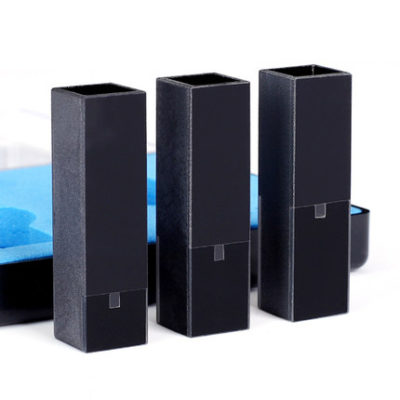
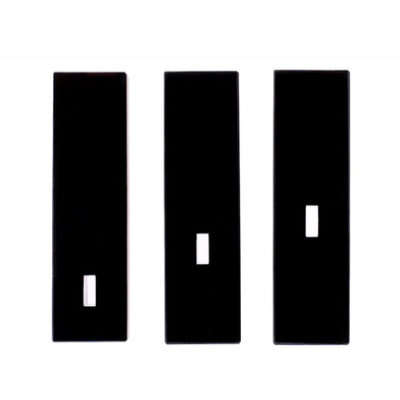
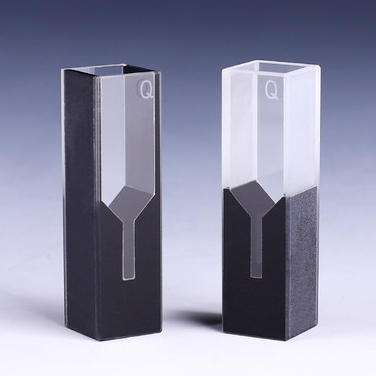
    8.5mm, 15mm, 20mm Z-Dimension are the common distance of cuvette center window to the cuvette bottom.
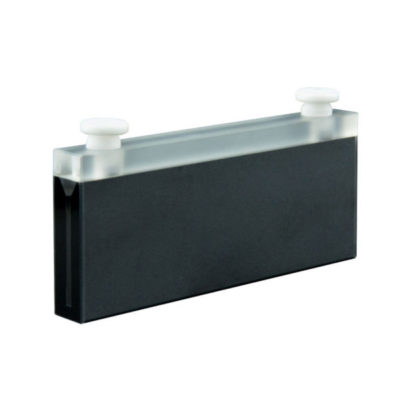
    If you use 15mm ZD black wall cuvette to a 8.5mm Z-height machine, the light beam will smission too low to tranmist the black wall of cell, which can’t reach the dector because it is blocked, then you will get 0% light transmission.

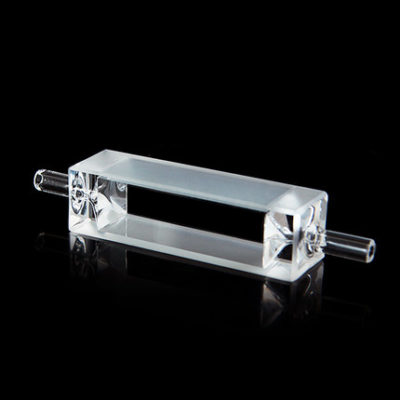
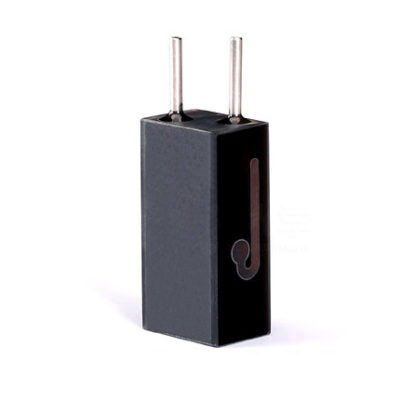
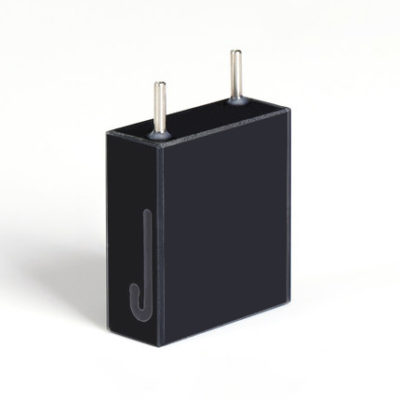
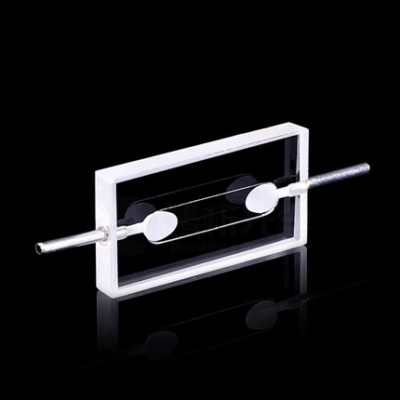
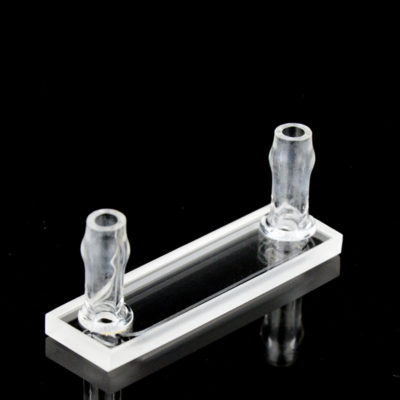
    We have varieties of absorption cuvettes with different ZD shown as below, such as standard pathlength, long pathlength, or flow cell.

    Z-Height Type1 Code1 Pathlength1 Volume1 Type2 Code2 Pathlength2 Volume2
    8.5/15/20mm 8.5mm Z Height 50ul black wall cuvettes QM79 10mm 50ul QB41-10mm100ul-Micro-Black-Wall-Cuvettes05 QB41 10mm 100ul
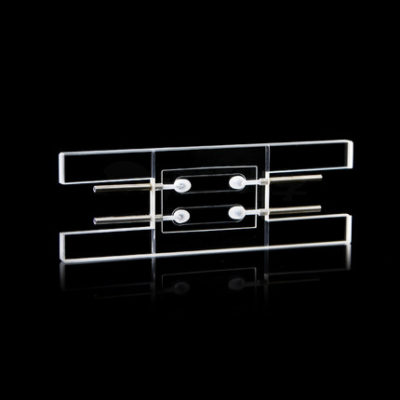
    8.5mm 8.5mm Z Dim 32ul black wall flow Cell QB35 10mm 32ul 8.5mm Z Dim 64ul self masking flow through cell QF75 20mm 64ul
    15mm 15mm-ZD-50ul-black-wall-cuvettes QB44 10mm 50ul 15mm-ZD-200ul-black-wall-cuvettes QB43 10mm 200ul
    15mm 15mm-ZD-2-13ul-black-wall-cuvettes QM56 1/1.5/2/2.5/5/6.5mm 2/3/4/5/10/13ul QB20-Black-Micro-Cuvettes02 QB20 10mm 50/100/200ul

    There are more Self-masking cuvettes, please go to our web or 저희에게 연락주세요 for quote if you want to buy cells.

  • How would the test results be affected if the fingerprints left on the sides of the cuvette?
    Fingerprints on the cuvette window will interfere with target light transmission, and will cause inaccurate measurements. It will lead a slightly higher absorbance reading and the measured concentration will be corresponding higher than the actual concentration, because fingerprints absorb the light.
  • How would the absorbance results be affected is there is disturbance of the light-path?
    The reading of measured absorbance will be increased if there is anything in the light path.
QF94 20mm 10ml Flow-Through Cell01

Usually, these are air bubbles in the sample, condensation on a lid, dust, scratches or fingerprints on the window of the cuvette. 그러므로, checking the cuvette just before measurement is recommended.
We have bubble-free New-Arrival cuvette to reduce the air bubble influence in the measurement.

Type Item Code Pathlength Inner Width Windows Volume Link
bubble free flow cell QF61 10mm 10mm 4 Clear Windows 3.5ML
QF62,-3.5ml,-Bubble-free-Flow-cell05 QF62 10mm 10mm 2 Clear Windows 3.5ML
QF4703 Quartz Funnel Fluorometer Cuvettes, 10mm Pathlength06 QF47 10mm 10mm 4 Clear Windows 3.5ML
  • How does pH affect light absorbance?
    When the pH of the solution changes, there are ionization in some of the molecules of the solution, then the structure of molecular changes, which will affect the determination of absorbance.
    As an example, for anthocyanin measurement of lycium ruthenicum, it is less accurate if measure the anthocyanin concentration in a single PH environment, because their color and absorbance changes with pH.

The anthocyanin is red form of 2-phenyl benzopyran when pH is 1.0, and colorless form of methanol off base in pH 4.5, and the absorbance of the former form is much higher than latter one. 그러므로, for the same solutions but different pH, the concentration will be different due to the absorbance reading is different, the and the conclusion will be inaccurate even though actual concentration is the same.

As a result, pH-differential method is a better way to determine the concentration of anthocyanin of lycium ruthenicum.

  • Does temperature affect UV Vis absorbance analysis?
    Temperature affects absorbance values.
    Different solvents’ interact performance are not exactly the same at different temperatures. It’s vital for an effective measurement to control the heating temperature especially some reaction undergoing at specific temperature. Solution parameters will change with the temperature changes:

    Rate of reaction-The reaction rate changes when temperature changed. This can cause a change in the activity of the sample. Enzymatic/biomolecular reactions are very sensitive to temperature.
    Solubility of a solute-Solubility is affected with variations in temperature. Poor solubility may result in imprecise absorption.
    Expansion or contraction of the solvent-This may lead to a change in the concentration of the solution and affect the absorbance, as absorbance is linearly related to concentration.
    Schlieren effect-This effect may occur with temperature changes, leading to a series of convective currents which may change the true absorbance.

For measurement of total nitrogen in water with spectrophotometer, in alkaline aqueous solution (>60), Potassium persulfate can be decomposed to produce potassium bisulfate and atomic oxygen, then the NO2-, NH4-, organic nitrogen in sample can be oxidized to nitrate nitrogen by atomic oxygen at 120-124℃. And we can determine the absorbance and concentration with this solution.

But there will be residual potassium persulfate in the solution to affect the absorbance if the temperature-controlled fail to meet the requirement. Potassium persulfate has a strong absorption peak at 220nm, which coincides with the absorption wavelength of total nitrogen. This absorption characteristic gradually weakens with the continuous decrease of potassium persulfate.

Temperature control can be achieved using high-performance nomothermal System for UV Vis spectrophotometry.

  • How does stray light affect the optical density (의) reading?
    Stray light is defined as light in the system at wavelengths (colors) other than the one intended, that is to say, stray light is not from the instrument’s light source and does not follow the optical path but reached the detector, which causing a deviation at the corresponding wavelength.

    그러므로, the optical density measured by the detector is higher than the true OD. In other words, the measured absorbance of samples is lower than the true absorbance due to the stray light contribution.
    There is one method to reduce stray light in these systems is the use of double monochromators.

6. How to reduce the effect on absorbance as mentioned above?

As we said before, different absorbance measurement requires different pH and temperature environment control, and stray light is a complex subject to figure out the exact problem to solve.

In this part, we will solve the influencing factors of cuvette for absorbance, right cuvette choosing, cuvette using and maintenance:

  • How to choose the right absorption cuvette for absorbance studies?
    In our previous article, 7 큐벳을 주문할 때 생각해야 할 것들, we have attempted to provide answers to choose the right cuvette, it is specified in the aspects of cuvette material, pathlength, Z-dimension, volume, cover type, cell shape and etc.
    There will be a further explanation on path length choosing of cuvette in the following part:
  • How to choose the right path length of cuvette?
    The proper pathlength of cuvette is to ensure absorbance values are within the dynamic range of the detector.
    Pathlength choosing of cuvette depends on the concentration of a sample and the chamber of instrument, which decide the upper light path length of detection.
  • What time will use “long path” cuvettes?
    When the concentration of the sample is too low to be measured using a standard 10mm optical path length cell, and concentration is difficult in cases where the sample vaporizes or undergoes a chemical or molecular structural change during the concentration process, then a cell with a longer optical path length is used to enable the optimum absorption sensitivity of absorption measurement.

For instance, a well-known study using a long pathlength cell is the turbidity analysis of water. 50mm and 100mm cuvettes are often used for analyzing samples with a low turbidity.

There are cuvettes with optical path lengths of 20mm, 30mm, 40mm, 50mm, 100mm, and other long path length cells, made of JGS1 Quartz, 200-2500nm.

Path Length Type1 Inner Width1 Code1 Link1 Type2 Inner Width2 Code2 Link2
20mm 20mm long path length cuvette 10mm QS43 20mm long pathlength quartz cuvette 50mm QC3909
20mm 20mm long pathlength black wall quartz cuvette QF80 https://ecuvettes.com/product/qr11-quartz-reaction-cuvettes-30-40-50mm-pathlength-powder-fused-2-polished-windows/ 20mm QC3001
30mm 30mm long pathlength quartz cuvette 10mm QS30 30mm long pathlength cuvette 30mm QR1103
30mm 30mm long pathlength black wall cuvette 2mm QB21 30mm long pathlength black wall flow cuvette QB26
40mm https://ecuvettes.com/product/qc2801-50mm-path-customized-flow-cell-45x12-5x52-5mm-with-side-and-bottom-connectors/ 10mm QS32 40mm long pathlength screw cap cuvette 10mm QF13
100mm 100mm long path length quartz cuvette 10mm QS27 qc2501-cylindrical-flow-cuvette (4) φ19mm QC2501
50mm 50mm long path length quartz cuvette 20mm QC51 qc2801-spectrometer-flow-cell (4) 10mm QC2801
100mm 100mm long pathlength airtight cuvette 10mm QC2701 100mm long pathlength airtight black wall cuvette 2mm QC2401

We also have long pathlength cuvettes made of optical glass, it range from 10-100mm. Click here to see more, 그리고 here to see the Glued* one .

  • When will use “short path” cuvettes?
    With regards to some high-concentration samples, it allows measurement with a 10-mm standard path length cell after diluting.
    But for some high concentration samples and can’t be diluted easily, 예를 들어, due to the analyte may interact with the solvent, diluting a sample may cause a change in the absorbance (i.e., shift in the peak wavelengths). In this case, a short path length cuvette is used to measure high-concentration samples without diluting effectively.

For instance, A well-known study using a short path length cell is solution analysis in the NIR region. If a 10mm standard pathlength cell is used for absorbance measurement in the NIR region, saturation often happens because light absorption by the solvent, making it impossible to determine the absorption of the analyte. Then a short path length cell is used to prevent absorption saturation because of the solvent.

There are short-path cells with optical path lengths of 0.1mm, 0.2mm, 0.5mm, 1mm, 2mm, 5mm, and etc.

Path Length Type1 Code1 Volume1 Link1 Type2 Code2 Volume2 Link2
0.1mm 0.1mm short pathlength cuvette QS41 35ul Details 0.1mm-short-panthlength-flow-cell QF77 6ul Details
0.2mm 0.2mm short pathlenth cuvette QS23 70ul Details QF92 0.2mm 16ul Flow Through Cell02 QF92 16ul Details
0.5mm QS3103-0.5mm-175uL-Ultra-Short-Path-Length-Quartz-Cuvettes QS31 170ul Details qm47-micro-flow-cell (8) QM47 150ul Details
1mm 1mm short pathlength cuvette QS21 350ul Details 1mm short pathlength flow cell QC50 860ul Details
2mm 2mm short pathlength cuvette QS26 700ul Details 2mm Short pathlength flow cuvette QF86 60ul Details
5mm 5mm short pathlength cuvette QS24 1.75ML Details 5mm short pathlength flow cell QC3701 650ul Details

We also have short pathlength cuvettes with macro window, air-tight, or narrow width as below.

Path Length Type1 Code1 Volume1 Link1 Type2 Code2 Volume2 Link2
0.2mm 0.5mm demoutanble short pathlength cuvette QM27 60ul Details 0.2mm Dual Channel FlowCell QF89 Details
1mm 1mm Air-Tight short pathlength Cuvette QC47 350ul Details 1mm short pathlength macro window cuvette QM26 1.5ML Details
1mm 1mm short pathlength screw cap cuvette QF11 350ul Details https://ecuvettes.com/product/qf11-1mm-spectrophotometer-cuvette-with-screw-cap-0-35ml-absorption-cuvette-quartz/ QM48 350ul Details
2mm 1mm short pathlength screw cap cuvette QF12 700ul Details 2mm short pathlength stopper cuvette QM36 700ul Details
5mm 5mm short pathlength screw cap cuvette QF14 1.75ML Details 5mm short pathlength long tube screw cap cuvette QC1401 1.75ML Details
5mm 5mm short pathlength narrow width cuvette QM67 350ul Details QM86 5mm 7ml Macro Window Cuvette02 QM8601 7ML Details

We have more short path length cuvettes, such as 1.5mm, 2.5mm, 3mm, 6mm, and optical glass cuvette is also in stock.

If you want to buy quality and affordable cuvette, 제발 저희에게 연락주세요 or go to our web ecuvette.com.

After we studied the cuvette choosing of material, pathlength, volume, Z-Dimension and ordered the right cuvette, it’s time for us to learn how to clean the cuvette if we didn’t buy the disposable one.

  • How to clean to the outer window of cuvette?
    The cuvette should be replaced immediately if there are cracks, chips or scratches on the window, or result in poor performance, less effective result and waste your sample and time, it is much expensive than the cost of a replaced cuvette.

For fingerprints on cuvette windows, proper cuvette cleaning is very essential, otherwise you will get a higher absorbance reading than its actual performance.
Using high quality lens paper to wipe off the fingerprints or other stain on the window of cuvettes is safe to use to keep cuvette window clean.
Special Notice: Do not use paper towels, Kimwipes or other similar types of paper products. Because abrasives are used on most paper products, which will scratch the cuvette´s surfaces. Scratches will cause light scattering and will affect the measurements ultimately.

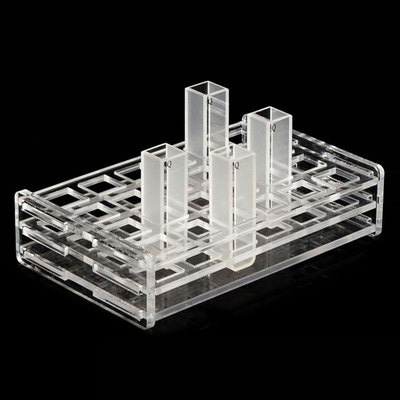
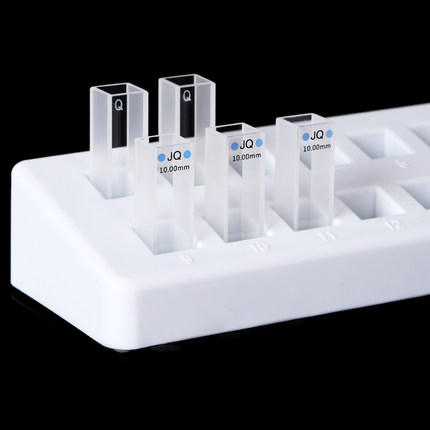
At the end of the day, clean your cuvettes thoroughly, air dry completely and store them in a cuvette rack or other suitable container. If the cuvettes didn’t dry completely and stored wet, they may dry with residue sample of previous application on the measuring surfaces, which will affect subsequent measurements.

큐벳 랙
QA30 10mm standard cuvettes racks ,16 positions04

DO NOT use ultrasonic cleaning bath to clean your cuvettes. Or your cuvettes will be damaged or shattered because of the high frequencies used in these baths.

그러므로, a proper cleaning solutions for your cuvettes will increase their useful life and provide more consistent results.

답장을 남겨주세요

귀하의 이메일 주소는 공개되지 않습니다. 필수 입력란이 표시되어 있습니다 *